Unknown's avatar

About Elizabeth Vega

Hippie, Wife, Auntie, Voter... Debt-free except the house, committed to staying that way. Working to live more lightly on the planet and more deeply among its people, and to sharing what I learn along the way.

Frugal Tuesday: Juice It!

IMG_0492.jpg

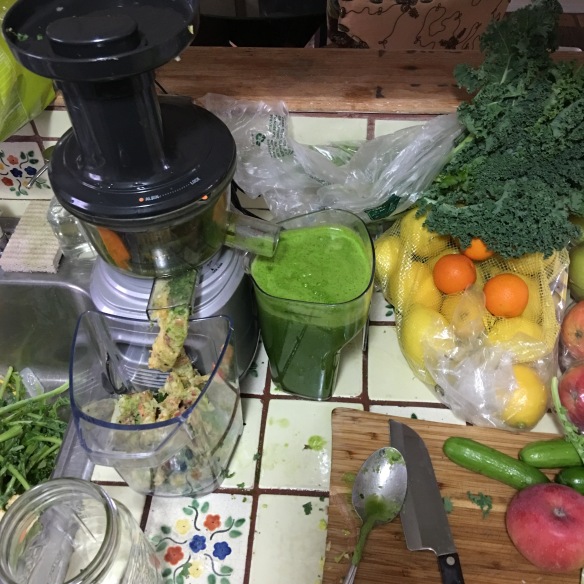
The other day, we found ourselves with the quality problem of having more fresh fruits and vegetables than we could reasonably consume before they went bad.  Noticing that some of them had already passed the point of being super-delicious for eating, Mr. Vega brought out the juicer and made some delicious green juice for us to drink. Super-yum. Bonus points for finding other uses for the pulp (zucchini muffins anyone?), or at least composting it (we did).

What do you do with produce that’s about to go bad?

FrankenSink

This is a post for the true DIY folks… nothing Pinterest-worthy here today! But life in a fixer-upper demands an embrace of the process, and that’s exactly what we’re doing.

This was an unexpected project, so I don’t have a photo of the hideous bathroom cabinet sink that came with our little hippie house, but it was an ancient wood laminate beast with a yellowed fake marble sink (and a burn mark where someone had once laid a cigarette on the edge of its basin).When it developed a drip, Mr. Vega decided that he would rather replace the whole thing than repair the faucet. We had gotten a white pedestal sink that had a crack in it from a neighbor who remodeled, and the $40 porcelain repair kit that we ordered was a total failure. With our House Fund running on fumes, we were starting to get discouraged.

Mr. Vega, being the never-say-die type that he is, stopped in to our local Habitat Re-Store to have a look, where he found a very passable basin for $20. He brought it home, and using the pedestal and faucet handles from the giveaway sink, and the stopper-pull from our previous ugly one, created the one you see above. He kept the actual faucet from the Re-Store basin, as it was the tallest of the three: Hand washing is much more convenient when you can actually fit your hands under the faucet! In the outline left on the wall by paint around the cabinet, you can see we’ve gained a good three inches of the room back, and the pedestal makes the small room feel much less confined than the cabinet did.

Unfortunately, the previous owners had not removed the cabinet sink to install the too-porous-for-a-bathrooom Saltillo tile they had chosen, but rather had gone to the trouble of cutting the tile to lay around the cabinet. Fortunately, they also had not bothered to remove the linoleum that graced the bathroom before the tile, making it much easier to remove than if the job had been done correctly!

So what you see on the floor in the space left by the removal of the cabinet is $9 worth of tile meant to look like rustic hardwood. It’s really kind of cool up close, but it was chosen strictly for its price, as this is a temporary stopover on our way to a full bathroom remodel (some day it will be glorious, with a walk-in steam shower and a skylight). One of the tiles needed to be cut down to fit right, and a kind employee at the Big Box store tool rental department looked the other way for twenty seconds while my resourceful husband made the single cut he needed. He also managed to find, in a scrap pile, just the right amount of baseboard to fill in the gap that was left when the cabinet came out.

Our next project will be to sand down some of the half-century’s worth of paint layers (nearly 1/8″!) made evident by the cabinet’s removal and to paint the whole room with white semi-gloss. I also have a feeling I’m not going to be able to prevent him from replacing the current flooring with ceramic tile, which would be fine by me!

Because of our futile attempt to repair the secondhand sink we had been given, the total cost of our new-to-us sink, including a few bits of hardware, caulk, and the three tile plates, came out to about $80, about half the cost of a brand-new pedestal sink. Mr. Vega got to pick up some new repair skills that will come in handy during the rest of our remodel, and we feel good about salvaging some things that were destined for the landfill (all the usable remaining sink parts will be donated back to the Habitat Re-Store). We’re really happy with the look of the new sink, as it’s much more retro-fabulous than what was in there before, and we think it fits nicely with the updated Atomic Ranch style we’re ultimately going for.

What projects have you undertaken lately in your home? Are you glad you did it, or do you wish you had called in a professional?


Frugal Tuesday: Freeze it!

IMG_0459.jpg

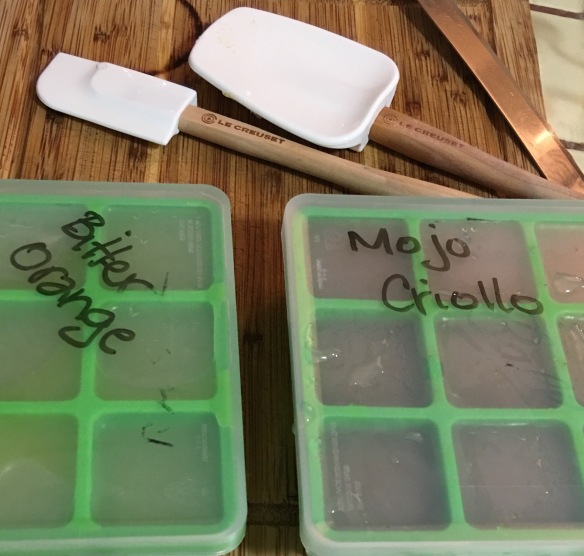
Years ago, Nigella Lawson blew my mind when she suggested freezing the rest of any wine still left in the bottle, to use for cooking later. Poured into a freezer bag and tossed in the freezer, it makes a sort of slush that is easily measured for use in recipes. I tried it, and I haven’t looked back! You can freeze all sorts of things: bread, milk, grated cheese, casseroles, Chinese take-out… even fresh herbs in olive oil or broth, poured into ice cube trays. Do you like iced coffee? Coffee ice cubes are a game-changer!

Frugalista extraordinaire Donna Freedman has mastered the art of freezing food scraps in a “boiling bag “to be reincarnated as broth later. If you like soup even a little bit, this practice will ruin you for canned soup forever. Luckily, soup freezes well, too.

If you’re not freezing your leftovers, or your little bits of ingredients that are left after using what you need for a recipe, not only are you wasting food and money, but you are depriving yourself of the enormous convenience of having just-enough tomato paste, pesto, or other fantastic things to take your weeknight cooking from adequate to awesome.

What’s in your freezer?


Our January 2016 Budget

I created my first budget about ten years ago from a template I found in Dave Ramsey‘s book The Total Money Makeover, and after years of practice, it’s become habit for me to make a new budget every month.  I get asked on a regular basis to help people set up their budgets. I’ve been able to sit with a few friends, but time and distance prohibit me from helping individually every person who asks. Every household is different, so every budget needs to be different, too. Also, it’s important for me to say here that I am not a financial planner or adviser, and that everyone needs to be accountable for making informed choices about their own money. That said, since it can sometimes be helpful to get an idea of what other people are spending on and saving for, we have decided to share our budget. I’m showing where our money goes as a percentage of our take-home pay, both to maintain some privacy and also because it’s more practical: Regardless of the dollar amounts, it’s a good idea to try and save some money each month, meet your basic needs, have a little fun if you can afford to, and return something, however small, to the communities and organizations you care about.

Here’s how it breaks down this month for us:

  • Giving 3%. This category is on the small side this month. Not being religious, we don’t tithe, and we only have one gift-giving occasion in January. The balance of this category will go into donation boxes of non-profit institutions we visit this month. We also make an effort to contribute to charitable organizations and relief efforts throughout the year, and volunteer some time to causes we support. 
  • Emergency Fund 10%. Our Emergency Fund is currently big enough for us to survive for about four months with no other income. While that felt comfortable for us when we had one spouse with a full-time job, and one with several part-time and freelance income streams, now that we are down (for the time being) to one partner with one full-time job and a very little bit of part-time work, we are working toward having a year’s worth of expenses set aside for emergencies. By my calculations, at the rate we are able to save, it would take us about six years to reach that number! Because we anticipate returning to our 2+ income status in a couple of years (thereby returning to a smaller Emergency Fund), we’ll probably never hit our temporary goal, but we’re aiming to set aside 10% of everything we bring home in the meantime. 
  • Tax & Insurance Fund 10%. We maintain a separate account where we amortize our annual term life and auto insurance premiums, and set aside money to pay taxes on any 1099 income. 
  • Mortgage 25%. Our only debt is this 30-year fixed-rate loan, and we made a 20% down payment to avoid PMI. If we don’t pay anything extra, the payment (including principle and interest as well as escrow for property tax and insurance) is a quarter of our current take-home pay. We REALLY wanted a 15-year mortgage, but if we had done that, our currently reduced income would be more of a crisis than an inconvenience, so I guess we made the choice that was better for us. Still, we’re planning to get it paid off just as soon as we can.
  • Utilities 3%. This includes electric, water, natural gas, sewer and trash pickup. We are constantly looking for ways to reduce our usage, and hope to continue to see this number go down.
  • Mobile phones 3%. Our mobile phones are recent-release smart phones with high-usage packages. Admittedly an indulgence, we switched providers last year to save about $250/year over what we used to pay, and this expense would be the second cut we made in a financial crisis (the first is coming up below).
  • Home Improvement 2%. The Home Improvement Fund is one of the last budget categories we pay into right now. We are making continuous minor improvements at the Little Hippie House, and hoping to save enough to replace the aging roof, remodel the bathroom & kitchen, tear down a load-bearing wall, and install new floors. That all could take quite a while, but we’ll keep chipping away at it, as our finances allow.
  • Cable/Internet 2%. Cable would be the first thing to go in the event of a financial crisis, and I suppose our internet would have to slow down a lot if things got tight (or maybe not: Google Fiber is slowly making its way into our neighborhood). But it’s another indulgence we’re comfortable with for now.
  • Transportation 1%. Our transportation expenses will be ridiculously low this month, in part to one of us being a stay-at-home spouse, and the other one working just a few miles from home. Having paid-for cars that won’t need servicing, inspections, or registration in January helps a lot, too! (Remember, though, that our car insurance falls into another category… this number would double if we included it here)
  • Food 11%. Food is the big budgetary challenge for us this month, but we’re determined to make it work. When our income is bigger, we normally spend about double what we’ve allotted for January! This month, we’re planning to minimize meals out, work our way through the frozen holiday leftovers, and take advantage of our upcoming small winter garden harvest. In addition to feeding ourselves this month, it’s my hope to use 5-10% of our weekly food budget to build our home food store… I really love going to our little chest freezer for a gallon of milk or to our garage for a jar of peanut butter instead of having to run to the market when things run out!
  • Pet Care 1%. This category this month consists entirely of canned food for our two cats. We have more than enough kitty litter and dry food to get through the month, and their annual veterinary visits aren’t until March. 
  • Clothing 2%. We aren’t planning any clothing purchases this month, but we’re setting a little aside so we can do a Big Shop in the Spring. 
  • Entertainment 3%. Entertainment is the one area where we consistently  underspend! Every month, it’s a challenge to get ourselves out to the movies, a play, or to hear some live music. We’re still working on that, for the sake of balance.
  • Personal Care 9%. Our Personal Care budget should really be called “MY Personal Care budget,” as Mr.Vega gets an inexpensive haircut every other month or so, and is in the process of growing an Epic Beard, so we no longer buy him razors or shaving cream. Because I’m in the process of Changing Looks, hairwise, this month, this category is more than double what it usually is.
  • Education 6%. Even community college costs something, at least for now: there are a lot of political promises being made on the campaign trail to change that. That will be lovely if it happens, but in the meantime about 6% of January’s pay will go for tuition. 
  • Vacation 7%. Last summer, we went to a five-day music & arts festival that we just loved. It’s time to buy tickets for the next one, and because it’s an out-of-town camping trip, we count the tickets as a travel expense, rather than “entertainment” (and this part is a little weird, but because the event is limited-capacity, tickets are sold lottery-style, with each person allowed to request a maximum of two tickets. We each put in for two, and if we get all four, we’ll sell the extra pair at face value and recoup half of our expense. But we’re sending payment for four tickets in January, so that is what we have to budget for).
  • Professional Development 2%. My new job will reimburse me for this training after I complete it this Spring, but registration is first-come-first serve, which is why I’ll be paying for it this month.

So there you have it: our January budget, with every dollar accounted for. There’s plenty of room for improvement, but we’re not unhappy with it. Feel free to share in the comments how different it is from (or similar to) yours… I’m always curious to learn how other people are doing it.

New Year, New Website: LittleHippieHouse.com

Happy New Year!

I started and named our blog when we were still in Los Angeles, preparing to make our big move to Austin, uncertain of what our lives might become. Since buying our home last July, we have started calling it our Little Hippie House, which represents well our intention of smaller-space, simple, natural living. We want our home to be as self-sufficient as possible, a welcoming center for the creative and community-minded group of friends we are lucky enough to be meeting in our new home city of Austin, Texas, and an environment supporting our own healing and personal growth as well as offering encouragement to all who visit (either in person or online).

In the year ahead, I’ll continue to share our personal finance journey, how we are fixing up our home and making the house and property more self-sustaining, and what we are doing to live the healthy, happy, socially responsible lives we aspire to as individuals. You can also find me on Twitter: @lilhippiehouse.  Please feel free to comment, share, and link to your own blogs or sites throughout the year… the more the merrier!


Frugal Tuesday: Find the Free Fun!

IMG_0389

Happy Tuesday, and Happy Almost-New Year!

We had family visiting us over the holidays, and so we got to walk the fine line between being generous hosts, and maintaining our budget. We’re fortunate to live in a city that actually has a website called Free Fun in Austin, but most cities have plenty of low- or no-cost activities available.

This week, we toured the Capitol of Texas,  checked out the decorated trees on Highway 360, posed for pictures in front of a few of Austin’s fantastic murals, and took a drive down to San Antonio to  visit the Alamo and have dinner at their beautiful River Walk.

Restaurants, guided tours and theme parks are lots of fun, but so many museums and attractions that don’t cost anything. Do a search for “Free Fun” and your city name, and what you find just might surprise you!


Frugal Tuesday: Make Your Own!

A few years ago, in one of those hip-but-quaint coffeehouses, there were bags of cello-wrapped handmade marshmallows hanging out by the cash register. $7 for a bag of four didn’t seem like too much to pay for something that would delight Mr Vega so much. And they were fantastic… Fluffy, light, nothing like the half-eaten bag of stale jet-puffs that always seemed to be in the cupboard but no one remembered buying it… Or eating any

Imagine my delight when I came across Alton Brown’s homemade marshmallow recipe. The same $7 I spent on four perfect marshmallows will make me over a hundred of the very same ones at home, and they are just as delicious as the expensive ones.

And even though it’s dead simple, people think you’re kind of a badass when you make the stuff they’re used to buying.

Think about the ways in which you indulge yourself and question whether you might try making it yourself. Around here, in addition to marshmallows, we make our own kahlua, cherry liqueur, cold brew coffee, hot cocoa mix, peppermint bark candy, hot buttered rum batter, and just recently, I’ve graduated to basic body-care products, including a grapefruit salt-scrub and a whipped body butter. All for a fraction of the cost of store-bought, and we think the quality is better when we make it ourselves.

Why not give it a shot? The worst that could happen is that you don’t like it, or you find its not fun. But you’ll never know until you try!

Frugal Tuesday: Check Your City’s Webpage

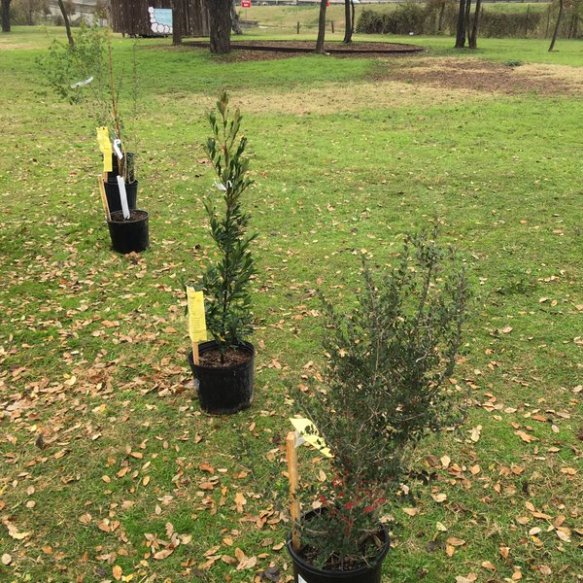
Many cities and utility companies have money-saving programs that residents are unaware of. In Los Angeles, we were able to find free mulch and compost, free large-item pickup tags, discounted worm composting bins (in exchange for attending a 2-hour class). Here in Austin, discounts on composters are also offered, as well as free paint, mixed from people’s hazardous-waste drop-offs! We have taken advantage of numerous opportunities for rebates offered through our local electric company, and just this past weekend, we got a couple of free shade trees for our Little Hippie House through an energy-company partnering with TreeFolks.

CWCrB_7UwAAsezM


Take a few minutes to browse around and see what your city or utility company might be offering that you can use… you may be surprised by what you find!

Frugal Tuesday: Grow Your Own

IMG_0062

I always thought I had a “black thumb,” but it turns out that gardening just takes practice! I’m not even close to being a Master Gardener, in fact I’m still very much a novice, but the more you do it, the better you get.

If you are new to gardening, know this: You will kill plants, and many of them! It’s okay. The planter pictured above cam with strawberry plants in it. We didn’t do a great job with the berries, and have re-purposed the pot as an herb garden. Each plant you kill adds to your list of Things Not to Do, and it will start to happen less and less.

Find out your gardening zone, look up the best times to plant in your region (hint: there are several ideal times each year, not just one), experiment with seedlings and try growing things from seed. If all you have is a balcony or patio, get some containers. If all you have is a sunny window, try growing some herbs. If you don’t have that,  consider joining a community garden, or try what my friend does and Stealth Garden! Seriously, she’s got a culinary herb garden hiding in plain sight among her apartment building’s landscaped shrubbery… some of her more astute neighbors even help themselves– with her blessing– to a trimming now and then! There may be an overlooked bit of soil on the property where you live or work where you might be able to plant a small Stealth Garden (or Stealth Plant) of your own.

Grow what you like to eat (or to make herbal tea out of, or to smoke, providing that it’s legal to grow where you live). To get the most bang for your buck, figure out which fresh fruits and vegetables you pay the most for, then try growing them yourself. It’s so much nicer to walk outside with a pair of scissors to get fresh herbs than to pay $3 for a plastic-wrapped sprig of already wilting thyme, oregano, or rosemary.

Give it a try. In a world of over-processed, over-packaged, nutrient-deficient food products, gardening is a revolutionary act. And a delicious one at that. Why not try it?

Skinny-Fat Finances

We’ve all met those people who are model-thin without effort. They eat whatever they want, they rarely exercise, they drink and smoke, they seem to live on a diet consisting mostly of fancy whippy coffee beverages, and still everything they wear looks good on them. Some of them even struggle to keep weight on when life gets stressful. But a deeper look into their medical charts might reveal hidden health problems such as heart disease, liver dysfunction, or diabetes. While many people work hard to maintain their healthy weight and fitness levels,  there is a portion of the population who look healthier than they are: the “skinny-fat.

Financial health is no different than physical health, in that what can be seen from the outside doesn’t always represent what’s happening behind closed doors. And in exactly the same way that Western society places a higher value on being thin than it does on being healthy, we are all also encouraged to look rich, rather than to be financially stable.


Both Mr. Vega and I were raised in skinny-fat financial households. Our Baby Boomer parents were the first generation of Americans with access to the easy credit we have all become so accustomed to. “Low monthly payments” must have felt like a godsend to our young parents, who wanted so much for their children to have the best of everything. They would have had no way of predicting that their resulting financial stress would affect us much more deeply than going without some luxuries might have.

We don’t remember what we got for Christmas or our birthdays every year, but we remember clearly the bills that came in pink envelopes. We remember the way our parents tried to ignore the telephone’s incessant dinnertime ringing, and the occasional times we had to bathe in cold water or to get ready for school in the dark because the utilities had been shut off for lack of payment. I, for one, will never forget coming home from school one day  in my teens to an IRS lien notice stuck to my front door, and spending the afternoon at a friend’s house, because I felt certain I would go to jail if I went into my house (everything got sorted out, and we got to keep our house, but that was a terrifying day for me).

As we approach the gift-giving holidays, we are bombarded with TV commercials showing children’s faces lighting up as they open their”perfect” presents on Christmas morning. Images abound of delighted spouses peeking into tiny jewelry boxes, or leaping around brand-new beribboned vehicles in the driveways of their lovely suburban homes. Who wouldn’t want to inspire that sort of joy in the people we love?

What those commercials don’t show is those same parents fighting over money in January (and February, and March…) when the bills arrive. We aren’t seeing those same children being told to “Tell them I’m not here” when the debt collection agencies start calling. The visions of happy families road-tripping to visit Grandma never reveal the expired insurance policies hidden in the glove box.

Here’s the thing: if you can afford a house with a yard for your kids, and a nice Compact Utility Vehicle to drive them around in, good for you. If designer clothes, annual vacations, and weekly mani-pedis are within your means, then party on. Nice things are… well, nice! We want to have them, and we want you to have them.

BUT (there’s always a “but):

If you are buying holiday gifts on a credit card that you will not be able to pay in full when the bill comes, you might be suffering from skinny-fat finances.

If you are considering a large purchase and your main concern is the amount of the monthly payment, rather than the total cost of the item, you might be suffering from skinny-fat finances.

If you bought and strung a million twinkly lights outside your house last weekend, but couldn’t make your rent or mortgage payment Tuesday, you might be suffering from skinny-fat finances.

We are here to tell you from personal experience that a little less stuff, a little less sparkle, a little less bling isn’t going to hurt anyone, but that getting it when you really can’t afford it could actually cause lasting harm. Living in a smaller home, driving an old-but-paid-for car, opening fewer gifts on holidays… none of that is so bad if you get to eat your holiday meal with loved ones who aren’t fighting, if your heart doesn’t pound every time the phone rings, if you aren’t afraid of the mailbox.

Anyone who has been there can tell you that being healthy is so much better than simply being skinny. And financial stability– freedom from debt, carrying enough insurance, and having enough money on hand to weather emergencies– feels so much better than looking wealthy, but worrying constantly about when it’s all going to fall apart.

If your finances are skinny-fat, just like with your body, you can’t heal them overnight. But you can begin to shift how you navigate life. You can refuse to put even one more non-essential purchase on a credit card. You can begin to record your expenses and get a clearer idea of where your money is going. You can begin to cultivate contentment and seek happiness in experiences instead of things.

And if you keep at it, before you know it, you will find that you have everything you need, and maybe more of the things you want. Before you know it, you’ll be looking back and thinking about how much better you feel than when you were over-extended and stressed about money all the time. Who knows? You may even be able to afford that shiny new thing you’ve always wanted… with cash!


IMG_1388